EAST HARLEM | WEST HARLEM | WASHINGTON HEIGHTS
HATE CALLING THIS A TOUR
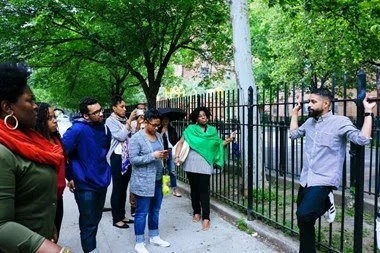
It's a street level ethnographic walk through El Barrio, West Harlem, and Washington Heights. Led by FEEGZ173, (Carlos Jesus Martinez Dominguez) who grew up arguing about it.
-
MOST NEIGHBORHOOD TOURS WILL TAKE YOU SOMEWHERE, POINT AT A MURAL, TELL YOU IT'S BEAUTIFUL, AND MOVE ON. MINE WON'T.
An ethnographic walk is a street-level experience. You're not sightseeing — you're learning to see. We stop at bodegas and talk about etymology. We stand in front of murals and I tell you what they got right and what they left out. We eat something fried and talk about where the recipe actually comes from. You'll hear things other educators won't say, because most of them don't come from here.
I've been leading these walks through East Harlem (El Barrio — not "Spanish Harlem") for over a decade. That includes years at El Museo del Barrio and the Caribbean Cultural Center African Diaspora Institute (CCADI), but also deep roots in the neighborhood's art community — through collaborations with Coronado Print Studio, a former East Harlem print institution, and through WordUp Books in Washington Heights. I'm from Washington Heights. But East Harlem knows me, and I know it. Those programs shaped what I do, but this walk has always been mine. My perspective, my IP, my tour. Now I'm offering it independently.
Bring your arguments. Debate is welcome.
-
"WOULD YOU RATHER READ A BOOK ABOUT ROME, OR WALK AROUND WITH SOMEONE WHO GREW UP THERE?"
The conversation about Latinidad, Blackness, Caribbean identity, and who gets credit for what is a conversation that is everywhere now. TikTok, podcasts, think pieces. And that's great, but feeling it is different than watching it.
When we stop at a cuchifrito spot, you can smell the food, taste it, hear the neighborhood around you with someone who knows it from the inside, while also explaining exactly why that food exists and where it came from. That stays with you differently. It's an experience, not content.
What I add that no algorithm can: my unprofessionalism. I'm not a college professor. I'm a high school dropout with a GED whose work has been acquired by permanent museum collections. I've done illegal things and I'll tell you about them. I've been making and debating this subject matter since before it had a hashtag. I come with authentic, unfiltered, real life experience.
And the neighborhood shows up too. A walk with me might get interrupted by a museum director who knows me, a street vendor with something to add, or a protestor who has opinions about what I just said — and will not hesitate to say so from across the street. That's not a disruption…it is actually the point. You can't get that from a screen.
THE WALKS
-
Murals, public space, visual culture
We walk through the neighborhood looking at it as a canvas. Murals, architecture, graffiti, the juxtaposition of a nightclub ad next to a 50 year old community painting. We talk about who makes art here, who gets credit for it, and who gets to call it "art" at all. Includes a stop at the Graffiti Hall of Fame (and a conversation about why the people who painted it aren't teenagers).
Good for: art students, design groups, visual culture enthusiasts, younger audiences.
-
Caribbean identity, resistance, and the neighborhood's real story
We start by challenging what you call the neighborhood we're walking around at and end by questioning most of what you thought you knew about salsa, bodegas, the Puerto Rican flag, and which island gets left out poems about Caribbean unity. We talk about gentrification in a neighborhood that has been displaced more than once. We talk about the people the institutions celebrated and the ones they ignored.
Good for: college groups, adult learners, corporate and private organizations, high school (9th grade and up).
-
No guardrails. All the uncomfortable conversations.
This is the version other educators skip. Innercommunity racism between Dominicans and Puerto Ricans. What institutions get wrong about the neighborhoods they're supposed to represent. The parts of celebrated histories that deserve to be challenged. My opinions are included at no extra charge. You'll leave with more questions than answers.
Good for: college students, educators, researchers, groups that specifically want the harder conversations.
EVERY WALK IS BUILT AROUND THE SAME CORE: THE HISTORY, CULTURE, AND PEOPLE OF UPTOWN NEW YORK. BUT THE DEPTH AND FOCUS CAN BE ADJUSTED DEPENDING ON YOUR GROUP. WE CAN DISCUSS AND TAILOR A VERSION ACCORDING TO YOUR NEEDS. READ MY SUGGESTIONS.
Areas Offered
East Harlem / El Barrio (Primary offering — July through September/October 2026)
Start: El Museo del Barrio, 104th St & Fifth Ave
End: Graffiti Hall of Fame
90 minutes to 2 hours (may extend)
Major stops include:
El Museo del Barrio exterior — Central Park edge (Seneca Village) — Carver Houses / public housing history — Puerto Rican flag — Spirit of East Harlem mural — De la Vega mural / Pedro Pietri — Manny Vega murals — Cuchifrito stop (optional purchase) — Las Dos Alas mural — Botanica (select groups) — Graffiti Hall of Fame
West Harlem (Available, co-led with educator Ayobe)
A different route, a different angle, the same commitment to the uncomfortable conversations. Co-led with Ayobe, an educator rooted in that side of town.
Washington Heights (Available upon request)
Dominican New York. The neighborhood Carlos was raised in.
PRICING & BOOKING
$500 for up to 25 participants
$125 for Zoom Lectures (ONLINE)
Sliding scale available for smaller organizations. Reach out and we'll figure it out.
Larger groups available upon request.
Season: July – October 2026 (East Harlem) Online all year round.
Other areas available outside this window — inquire directly.
Payment:
Private groups and individuals: Zelle, Venmo, check, or cash — due morning of.
Institutions (schools, nonprofits, corporations): Invoice + contractor paperwork (1099). Invoice due the night before.
Cancellation: 72 hours in advance, please.
FAQS
-
It's a walk. Ethnographic walk, specifically. It's discussion-driven, experiential, and rooted in the neighborhood. It is not sightseeing.
-
90 minutes to 2 hours for the standard East Harlem walk. It often goes longer depending on the group. Build in buffer.
-
East Harlem: El Museo del Barrio, 104th Street & Fifth Avenue.
West Harlem and Washington Heights: meeting point provided upon booking.
-
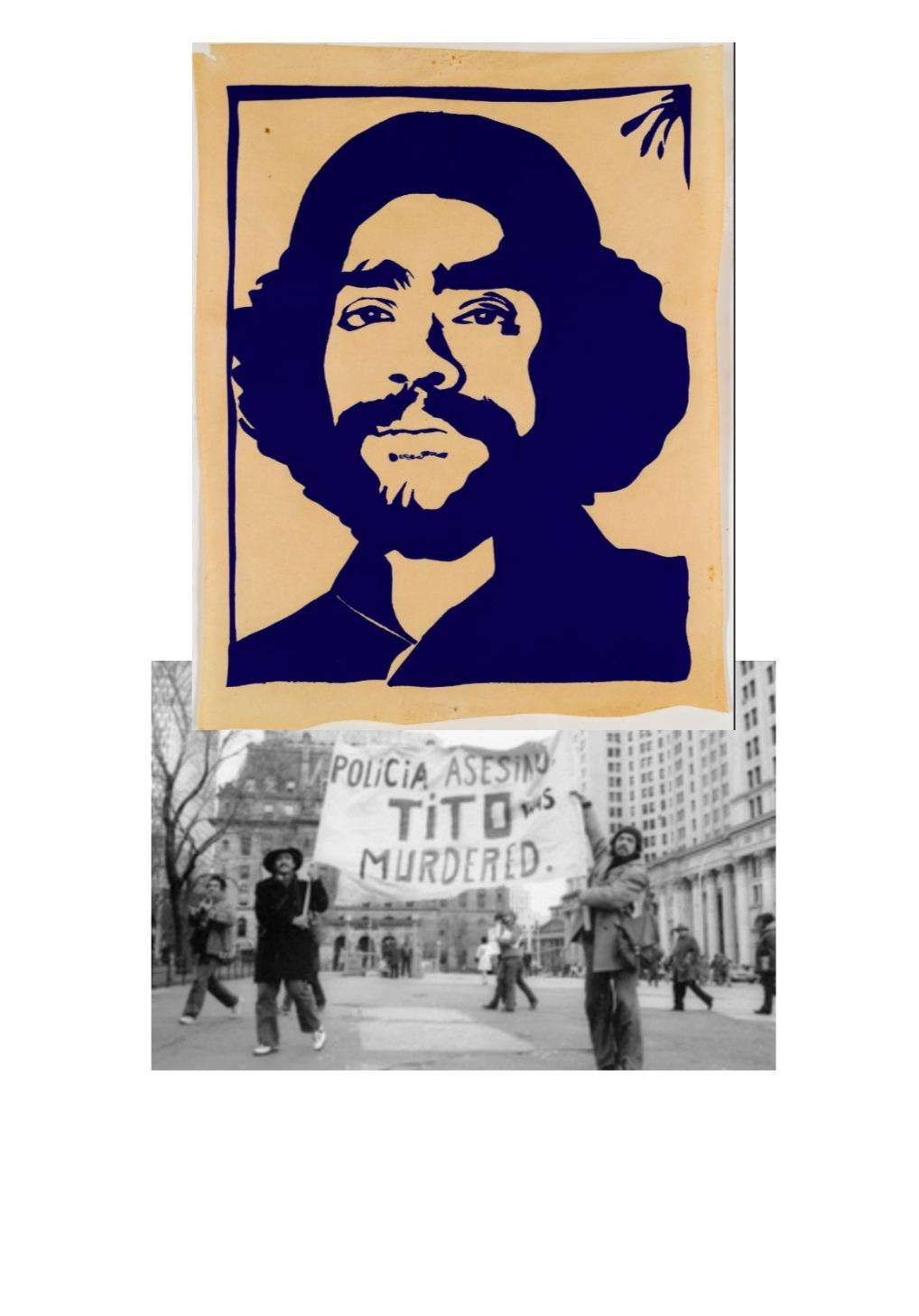
My typical audience is high school and up: college students, art students, adult groups, corporate organizations, and private groups. But I've adapted the walk for 4th graders when the teacher asked me to talk about the Young Lords, and I've done it for 50 people on a city block.
Up to 25 people recommended. Larger groups available upon request.
-
Yes. Content is tailored to age and learning goals. Share your group's needs when booking and we'll design the right version of the walk.
-
Not included, but there's usually a stop where you can buy something from a local spot. That's intentional. It supports the neighborhood.
-
Comfortable shoes. Water. Layers for the weather.
-
Light rain, we walk. Severe weather, we reschedule.
-
The walk moves at a moderate pace with frequent stops. If your group has mobility needs, let us know in advance and we'll adapt the route.
-
This is an outdoor walking experience in New York City. By booking or attending, participants acknowledge standard city walking conditions: uneven pavement, traffic, weather, crowds and agree to follow the guide's safety instructions. Carlos Martinez is not responsible for incidents caused by third parties or for personal belongings.